Notice: Use of undefined constant _WEBSITE - assumed '_WEBSITE' in /var/www/dynamic/-agonia.v1/www/templates/author.php on line 126 Endre Ady (Endre_Ady) : Poesia, Prosa, Biografia, commenti, testi

Poesia (0.077s) Agonia.Net - Il Portale Letterario !

agonia Agonia.Net | Regolamento | Pubblicitŕ Contatto | Registrati!


romana Poetry, prose, essays, comments, poems - International Culture and Literature english Poetry, prose, essays, comments, poems - International Culture and Literature francais Poetry, prose, essays, comments, poems - International Culture and Literature italiano Poetry, prose, essays, comments, poems - International Culture and Literature deutsch Poetry, prose, essays, comments, poems - International Culture and Literature espanol Poetry, prose, essays, comments, poems - International Culture and Literature


[ Creazione ][ Internet ][ Cultura ][ Societŕ ][ Eventi ][ Arte ][ Libri ][ Polemiche ][ Stampa ][ Regionale ][ _INTERVIEW ][ Contact ]

poezii


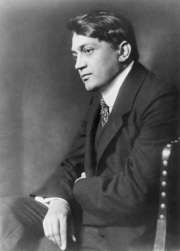
Endre Ady [Endre_Ady]
 
 Non ha inviato nessuna foto!


Cittŕ di residenza: Hungary
Di madrelingua Di madrelingua


Biografia Endre Ady

_WEBSITE Endre Ady


L`indirizzo diretto di questo autore é : 

 Active compilations of this author::

Questi sono i piů recenti testi di questo autore:

Poesia (17)
Tutti (17)

Questi sono i piů recenti testi di questo autore:

Commenti:

Testi iscritti da questo autore nella Biblioteca:

Pagina: 1

A trecut toamna prin Paris :
Poesia 2008-06-17 (170 visite)

Beneath Mount Sion :
Poesia 2005-05-28 (765 visite)

Cântecul iacobinului maghiar :
Poesia 2008-05-16 (293 visite)

Cei ce întârzie mereu :
Poesia 2008-06-10 (205 visite)

Cei ce mă vor petrece :
Poesia 2008-06-23 (141 visite)

Cu Leda la bal :
Poesia 2008-06-18 (134 visite)

Dă-mi ochii tăi : Traducere de Nicu Porsenna
Poesia 2005-10-12 (786 visite)

Eu am pornit din matca Tisei : traducere si adaptare de Octavian Goga
Poesia 2006-07-15 (442 visite)

Eu vin de la malul râului Gange : traducere si adaptare de Octavian Goga
Poesia 2006-07-15 (444 visite)

Femeile mele : Traducere de Nicu Porsenna
Poesia 2005-10-12 (791 visite)

În carul de foc al cântecelor :
Poesia 2008-06-18 (139 visite)

Liniştea Albă :
Poesia 2008-05-11 (359 visite)

Mireasa mea :
Poesia 2005-06-18 (1007 visite)

Mireasa mea : Traducere de Nicu Porsenna
Poesia 2005-10-12 (743 visite)

The Magyar Fallow :
Poesia 2005-05-28 (645 visite)

Tristeţea învierii :
Poesia 2008-06-24 (125 visite)

Vreau să te păstrez : Traducere de Nicu Porsenna
Poesia 2005-10-12 (854 visite)


Pagina: 1


Biografia Endre Ady

Poet, journalist, short story writer, who took the role of \"the conscience of the Hungarian nation,\" prophesying spiritual rebirth or pessimistically the destruction of \"Everything\". Ady is best-known for his daring works celebrating sensual love, but he also wrote religious and revolutionary poems. His expression was radical in form, language and content, mixing eroticism, politics, and biblical style and images with apocalyptic visions.

oh I have lived a disgusting life,
oh I have lived a disgusting life;
I shall be such a pretty corpse,
I shall be such a pretty corpse.
(from \'The Last Smile\')
Endre Ady, descended from impoverished landed gentry, was born in the remote village of Érmindszent, Austria-Hungary (now Ady Endre, Romania). At his birth Ady had six fingers on each hand. The extra two fingers were cut off by the midwife. Later he used to show the scars, calling them his \'wizard marks.\' Until the age of nine Ady attended the local Calvinist school - his mother came of a long line of Calvinist ministers. He changed to a Catholic school and went then to a Catholic gymnasium at the town of Nagykároly. Partly because of his drinking habits and free associating with girls he was transferred to a Calvinist college at Zilah.

During these years Ady started to write and consume alcohol seriously. After graduating he entered a law school but abandoned his studies for a newspaper post in Debrecen. Versek, his first book of poetry, appeared in 1899. From 1900 until his death Ady worked as a journalist, drifting from one provincial paper to another. He spent four years in Nagyvárad (now Oradea, in Romania), an important centre of intellectual life, where he contracted syphilis. Ady served on the staff of an opposition paper and his militant attitude to the excesses of nationalism was seen in poems written during this period.

In 1903 he published his first significant volume of poetry, Még egyszer. In the same years he met Adél Brüll (Diós), the cultured wife of a lawyer. She became \'Léda\' (notice the anagram of Adél) of his poems and his muse for the next nine years. His thinking radicalized after the 1905 Revolution. With his next book, Új versek (1906), Ady made his breakthrough as a poet, and initiated a revolution in Hungarian literature. Ady lived in Paris with Brüll much of his time from 1904 until 1914. Paris was for Ady the city of light but also the city of the Commune of Paris (1870-71) and the craddle of modern poetry. He worked as a foreign correspondent for Budapest papers, among others for Budapesti naplón, and made frequent visits to Hungary, Italy, and elsewhere. Between the years 1908 and 1919, he was closely associated with the journal Nyugat, which kept him in the public eye. The journal published works from some of the best writers of the era, and took a major role in fostering the emergence of modern Hungarian literature.

Óh, nagyon csúnyán éltem,
Óh, nagyon csúnyán éltem:
Milyen szép halott leszek,
Milyen szép halott leszek.
(from \'Az utolsó mosoly\', in Új versek)
In Új versek, and in its successor Vér és arany (1907), Ady found his own way of expression, deliberately shocking with piled up adjectives and repetitions. Az Illés szekerén (1908) expressed Ady\'s continuous struggle with religion. God is for the poet the Almighty who is bored with virtuosos and doesn\'t guide, revenge or reward. \"My skin belongs to the devil,\" he confesses. Ady\'s works provided an immediate challenge for the younger generation and Ady soon became a nominal leader of the literary group Holnap. However, literary opinions were divided and his unconventional language, adopted from symbolist, shocked the audience. He attacked the ruling class for their greed, castigated Hungary as a backward-looking country, and advocated modernity. In \'Az ős Kaján\' he wrote: \"My Lord, my soil is Hungarian soil, barren exploited. / Why encourage us to unmindful rapture? / What is worth of pledges in wine and blood? / What may the worth of a Hungarian be?\" Among others, prime minister István Tisza, and the leading conservative journalist Jeno Rákosi were his prominent opponents.

In 1912, \'Léda\' started an affair with another man and Ady\'s \'A Message of Gentle Dismissal\' from 1913 became his final words to Leda. Ady consulted Freud\'s outstanding Hungarian pupil Sándor Ferenczi, who sent him to a clinic. After recovery he started a series of affairs, and married in 1915 a young girl, Bertuka Boncza (\"Csinszka\" in his poems), who had started a correspondence with him. However, Ady found only brief periods of happiness and respite from nervous tensions in the secluded Transylvanian home of his wife. In one poem he wrote. \"I do not know why and how long / I am going to remain with you / but I hold your hand / and guard your eyes.\"

You hear the hollow hoofbeats of
a horseman lost since long ago.
The shackled souls of ghosted woods
and ancient reedlands wake to woe.
(from \'The Lost Horseman\')
During World War I Ady protested vigorously against the war and forces of reaction. In \'Láttam rejtett törvényed\', written in 1914 after Archduke Franz Ferdinand and his wife were assassinated in Sarajevo, the poet hears thunder from clouds and sees himself dead, in ice while the world is in flames. When the radicals took over the government and István Tisza, the war leader, was murdered, Ady was horrified. He suffered a stroke that affected his speech, but not writing. Ady\'s pacifist poems - unique at that time in Hungary - appeared in A halottak élen in 1918.

Ady was elected in October 1918 chairman of the Vörösmarty Academy which was just founded. In the last months of his life, Ady was \"more of a living corpse than a brilliant intellect\" (Lóránt Czigány in The Oxford History of Hungarian Literature, 1984). Weakened by alcoholism, Ady died of pneumonia in Budapest on January 27, in 1919. A new revolutionary government, formed in the wake of postwar upheavals, arranged a state funeral for him. Ady\'s last poem was \'Az utolsó hajók\' (Last Ships), where he leaves open his belief or unbelief in God - \"you Are Not\" he wrote in front of death. It is told that just a few months earlier Ady teared up his old faithful companion, the Bible, which had deeply impressed his own language.

Ady was very prolific. He wrote some 1 000 poems and published 10 volumes of poetry in 12 years, as well as short stories and countless articles. Ady\'s complete poems, Összes versei, were first published in 1930. He remained a legendary figure in Hungarian literature: he founded no school but opened up new possibilities for expression. Some of the critics have claimed, that a part of Ady\'s poetry was essentially political journalism in verse form, requiring familiarity with the issues of the poet\'s time


shim La Casa della Lettertura, Poesia e Cultura. Scrivi e accontentati con articoli, saggistica, prosa, poesia classica e contemporanea e concorsi. shim
shim

Agonia  Cerca  Agonia.Net  Forum  

La riproduzione di qualsiasi materiale che si trova in questo sito, senza la nostra approvazione, é assolutamente vietata
Copyright 1999-2003. Agonia.Net

E-mail | Politica di condotta e confidenzialitŕ

Poesia (0.080s) Agonia.Net - Il Portale Letterario !

# You own a cultural website? Join the Cultural Topsites!